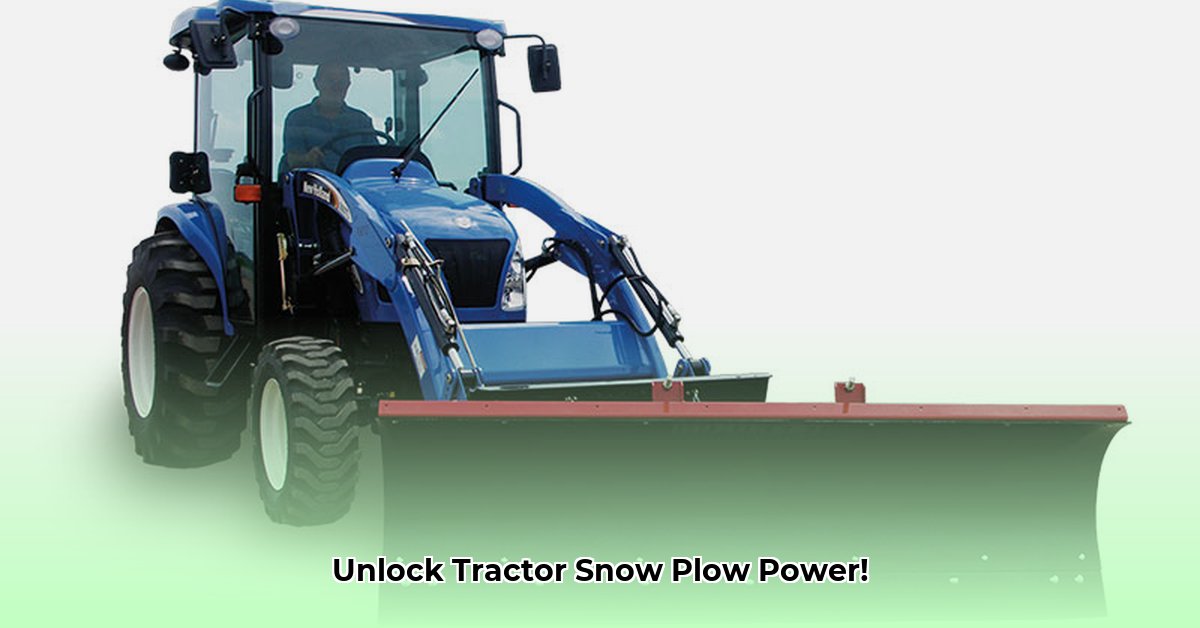
Snow Plow for Tractors: Maximizing Efficiency on Your Farm
Winter's harsh grip can significantly impact farm operations. Snow accumulation blocks access roads, delaying crucial tasks and causing financial losses. However, leveraging existing tractor resources for snow removal offers a solution. This guide details how a tractor-mounted snow plow can transform winter challenges into manageable tasks, increasing efficiency and cost-effectiveness. For more detailed information, check out this helpful resource: Tractor Snow Plow Guide.
Why Use a Tractor-Mounted Snow Plow?
Manual snow removal methods (shoveling, small snow blowers) are slow, inefficient, and physically demanding, particularly for large areas. A tractor-mounted snow plow offers a superior alternative:
- Speed and Efficiency: Clear large areas rapidly, freeing time for other farm duties. This efficiency translates to direct cost savings. Imagine clearing long driveways and barn access roads in a fraction of the time it would take manually. Does that extra time translate into higher yields or a more relaxed work schedule?
- Cost-Effectiveness: If you already own a tractor, adding a snow plow is far more economical than purchasing a dedicated snow removal machine. You optimize existing resources, maximizing return on investment. Isn't this a more sustainable approach to winter farm management?
- Environmental Considerations: Depending on the tractor and plow, this method can reduce environmental impact compared to other approaches, particularly regarding fuel efficiency per square foot cleared. Local conditions and farm size heavily influence optimal choices.
Choosing the Right Equipment: Matching Tractor and Plow
Selecting optimal snow plow and tractor combinations depends on individual farm needs. Key factors include:
- Tractor Horsepower: Sufficient horsepower is crucial to avoid damaging the tractor or getting stuck. Match the tractor's power to plow size and anticipated snow conditions (heavy snowfall needs more horsepower).
- Plow Width: Wider plows cover more ground faster, but require more powerful tractors. Consider the area needing clearing; larger farms need wider plows.
- Attachment System: Quick-attach systems allow switching between plow and other attachments, maximizing tractor versatility. Choose reliable systems proven in the field.
- Budget: Plows range in price. Account for initial cost, maintenance, and fuel expenses. Used plows can be cost-effective but require thorough inspection.
Here’s a helpful guideline:
| Tractor Horsepower (HP) | Suitable Plow Width (feet) | Typical Snow Conditions |
|---|---|---|
| Less than 50 | 6-8 | Light to moderate snowfall |
| 50-100 | 8-10 | Moderate to heavy snowfall |
| More than 100 | 10+ | Abundant heavy snowfall |
This is a general guide; consult local dealers for specific recommendations based on your region and tractor model.
Safe Operation and Maintenance: Prioritizing Safety
Safety is paramount. Review tractor and plow manuals before use. Follow this checklist:
Pre-Operation Checks:
- Visual Inspection: Check for loose bolts, worn parts, and hydraulic fluid leaks on both tractor and plow.
- Hydraulic System Check: Ensure proper hydraulic system function and sufficient fluid levels.
- Lights and Visibility: Verify all lights are operational and vision isn't obstructed.
Safe Operation:
- Slow and Steady: Drive slowly and carefully, avoiding sudden movements on icy or uneven surfaces.
- Situational Awareness: Be mindful of surroundings - pedestrians, other vehicles, obstacles.
- Visibility: Keep windows and lights clear of snow.
Regular Maintenance:
- Lubrication: Regularly lubricate moving parts to prevent wear.
- Inspections: Regularly inspect for damage or wear, replacing worn parts promptly.
- Storage: Store the plow properly during the off-season.
Understanding the Costs: Long-Term Perspective
While the initial investment might seem significant, long-term cost savings are substantial. Factor in avoided labor costs, fuel consumption, maintenance, and potential repairs. Financing options often exist through equipment dealers. Preventative maintenance is far cheaper than emergency repairs – a well-maintained system lasts longer and reduces repair costs.
Real-World Success Stories
Farmers have successfully used tractor-mounted snow plows. One farmer with a modest setup significantly reduced snow removal time, enabling more efficient task scheduling. Larger farms utilizing more powerful tractors report clearing vast areas in hours instead of days. These examples highlight the system's efficiency.
Maximizing Efficiency: Practical Tips
- Plan Your Route: Prioritize critical areas (driveways, access roads).
- Work in Stages: Make multiple passes for heavy snow to avoid overloading the plow.
- Maintain Visibility: Keep lights and windows clear.
- Terrain Awareness: Exercise extra caution on hills and uneven surfaces.
Careful planning, thorough maintenance, and a safety-first approach maximize efficiency and provide a substantial return on investment. Isn't proactive winter management key to a successful farming operation?